Overview of Islamic Schools in UK: Education & Faith
Discover an overview of Islamic schools in the UK, blending faith and academics with National Curriculum standards in both independent and state-funded models.
ISLAMIC SCHOOL
Ruchita Hasan
2/7/20264 min read
Overview of Islamic Schools in the UK
When considering faith schools in the UK, many people picture a local Church of England primary—a familiar part of the educational landscape. Another important group, Islamic schools, now serves thousands of children within the British Muslim community but remains a source of curiosity for many. These schools balance the National Curriculum with religious learning and operate under both private and state-funded models, fitting into Britain's diverse educational system in specific, regulated ways.
School vs. Madrasah: The Crucial Difference
A common source of misunderstanding in Islamic education is the confusion between two distinct institutions: the full-time Islamic school and the part-time madrasah. While both are important to a Muslim child's learning, they serve entirely different purposes.
A full-time Islamic school operates like any other primary or secondary school, providing a complete education from Monday to Friday. In contrast, a madrasah is a supplementary class, typically held for a few hours in the evenings or on weekends. Its purpose is not to replace mainstream schooling but to provide religious instruction, such as learning to read the Quran and understanding Islamic beliefs.
The vast majority of Muslim children in Britain attend a standard state school during the day and a local madrasah after hours. Acknowledging this difference is essential, as only the full-time institutions are state-regulated establishments aiming to deliver the National Curriculum alongside a faith ethos.
Who Pays for Islamic Schools? The Two Funding Models
Like many faith-based institutions in the UK, Islamic schools fall into two main categories based on their funding. This structure determines how they operate and fit within the national education system.
The funding breakdown is as follows:
Independent (Private) Schools: The vast majority of Islamic schools are independent, funded primarily through fees paid by parents. While they have more flexibility with their curriculum, they must still meet rigorous government standards for education and student welfare.
State-Funded (Voluntary Aided) Schools: A smaller but growing number are funded by the government and are free for pupils to attend. These 'Voluntary Aided' schools operate in the same way as state-funded Church of England or Catholic schools.
State-funded Islamic schools are held to the exact same standards as any other. They must teach the full National Curriculum and are regularly inspected by Ofsted, the official government inspectorate for schools in England. This ensures that regardless of a school’s faith character, its academic provision and student safeguarding are accountable to the public.
Balancing Faith and Finals: The School Timetable
The foundation of any state-funded Islamic school’s timetable is the full National Curriculum. Subjects like Maths, English, Science, and History are mandatory and taught to the same standards as in any other state school, ensuring every student receives a core academic education that is accountable, tested, and nationally recognised.
Building on this foundation, Islamic schools operate a ‘dual curriculum’ by strategically weaving in faith-based education alongside national requirements. A student might move from a standard chemistry lesson to a class on Islamic history, creating an educational experience that integrates both their British and Muslim identities.
These faith-specific subjects typically include lessons in the Arabic language, studies of the Quran, and explorations of Islamic history and ethics. This provides a holistic education where academic achievement is pursued within a framework of religious and moral values, creating a unique ‘Islamic ethos’ that influences everything from daily routines to school-wide principles.
From Halal Lunches to Daily Prayers: An 'Islamic Ethos' in Practice
While the curriculum outlines what students learn, the ‘Islamic ethos’ shapes how they experience their school day. This is about creating a positive and nurturing culture that reflects Islamic values in practical, everyday ways, supporting a student’s identity as both British and Muslim.
Beyond the classroom, this ethos comes to life in several visible ways. A typical school day is structured to include:
Observance of congregational daily prayers.
The provision of Halal food, meaning all meals are prepared according to Islamic dietary guidelines.
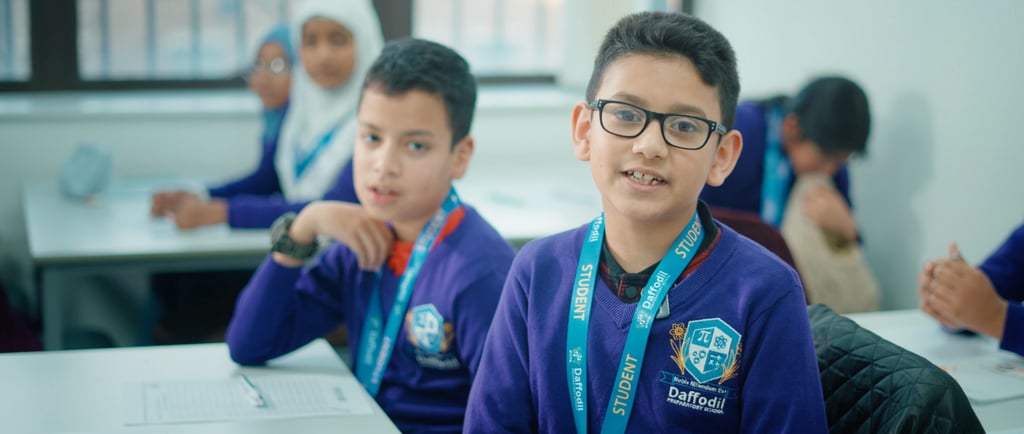
An encouragement of modest dress, with school uniforms often including the headscarf (hijab) as an option for girls.
A strong emphasis on charity and community service projects.
This faith-based environment helps cultivate character, with principles like compassion, respect, and social responsibility woven into the school’s fabric. By integrating these values into daily life, Islamic schools aim to help pupils grow into conscientious and active members of British society alongside their academic education.
Are Islamic Schools Delivering Good Results? A Look at Official Data
The quality of all schools in Britain is measured by one official yardstick—inspection by Ofsted. Islamic schools are no exception and are held to the same rigorous standards for teaching and student welfare as any other state or independent school.
The results from these inspections are often remarkable. A significant number of Islamic schools achieve 'Good' or 'Outstanding' Ofsted ratings, the top two grades available. This success is frequently mirrored in academic performance, with several schools consistently appearing at the top of national exam league tables for their excellent GCSE and A-Level results, outperforming many other types of schools.
This strong performance demonstrates that a faith-based education and academic excellence can go hand in hand. For many of these successful institutions, the structured, value-driven environment is a key factor in their achievement, creating an atmosphere where students are empowered to excel.
An Integral Part of Britain's Education System
The landscape of Islamic education in Britain is clearer when key distinctions are made. It is essential to differentiate between full-time, curriculum-based schools and supplementary part-time madrasahs. These schools operate within the established UK system as either fee-paying independent institutions or state-funded Voluntary Aided schools.
Both models are required to deliver the National Curriculum and are subject to Ofsted inspections, with many achieving top ratings and excellent academic results. By integrating faith and academics, Islamic schools are a dynamic and integral part of Britain’s diverse educational tapestry.
Daffodil Preparatory School
161-163 Commercial Road, Tower Hamlets, London, E1 2DA, United Kingdom
Your Local Independent School with Islamic Ethos
Growth
info@daffodilprepschool.org.uk
+44 020 45399 737,
+44 075 7053 6246
Copyright © 2026 Daffodil Preparatory School - All Rights Reserved.
Designed, Developed & Maintained By Blueprint Digital Dynamics
admin@daffodilprepschool.org.uk